
Mastering Das Optimale for Peak Performance
In the dynamic and often challenging world of Forex trading, achieving consistent and sustainable success is a goal for every participant. Many factors contribute to long-term profitability, from robust analytical skills to disciplined execution. However, at the very core of a resilient trading strategy lies a concept often overlooked by beginners but revered by seasoned professionals: Das optimale Chance-Risiko-Verhältnis, or the optimal risk-reward ratio. This fundamental principle dictates how much you stand to gain versus how much you stand to lose on any given trade, and mastering it, particularly aiming for a minimum 1:3 ratio, is absolutely critical for sustainable Forex success. Understanding and implementing Das Optimale is not just a recommendation; it’s a strategic imperative that can transform your trading journey from speculative gambling into a calculated, profitable endeavor.
Understanding Das Optimale: The Core of Risk Management
At its heart, Das Optimale Chance-Risiko-Verhältnis refers to the comparison between the potential profit of a trade and its potential loss. For instance, a 1:3 ratio means that for every 1 unit of currency you risk, you aim to gain 3 units. This seemingly simple calculation has profound implications for your overall trading performance and the longevity of your capital.
Many new traders focus solely on their win rate, believing that the more trades they win, the more profitable they will be. While a high win rate is certainly appealing, it can be deceptive without considering the risk-reward ratio. A trader might win 70% of their trades, but if their winning trades only yield 0.5 units of profit for every 1 unit risked, they could still end up losing money overall. This is where Das Optimale truly shines, providing a protective layer against inevitable losing streaks.
Why a Minimum 1:3 Ratio is Das Optimale for Forex
The recommendation for a minimum 1:3 risk-reward ratio isn’t arbitrary; it’s rooted in statistical probability and the realities of trading. With such a ratio, you don’t need a high win rate to be profitable. In fact, you can be right less than 50% of the time and still come out ahead. Let’s break down the math.
Consider a scenario where you risk $100 per trade. With a 1:3 ratio, your target profit for a winning trade would be $300. If you take 10 trades:
- **Scenario 1: 50% Win Rate**
- 5 winning trades: 5 * $300 = $1500 profit
- 5 losing trades: 5 * $100 = $500 loss
- Net Profit: $1500 – $500 = $1000
- **Scenario 2: 30% Win Rate**
- 3 winning trades: 3 * $300 = $900 profit
- 7 losing trades: 7 * $100 = $700 loss
- Net Profit: $900 – $700 = $200
As you can see, even with a win rate as low as 30%, a 1:3 risk-reward ratio still allows for profitability. This resilience is what makes this ratio Das Optimale for navigating the inherent volatility of the Forex market. It builds a buffer against the inevitable drawdowns and reinforces the psychological aspect of trading, allowing you to withstand losses without panic.
Implementing Das Optimale in Your Trading Strategy
Adopting a 1:3 (or greater) risk-reward ratio isn’t just about wishing for big wins; it requires a structured approach to trade planning and execution. It means being selective about the trades you take and ensuring your entry, stop-loss, and take-profit levels are strategically placed.
Defining Entry, Stop-Loss, and Take-Profit Levels
The foundation of achieving Das Optimale lies in meticulously defining these three critical points for every trade:
- **Entry Point:** The precise price at which you open your trade. This should be based on your technical or fundamental analysis, identifying a high-probability setup.
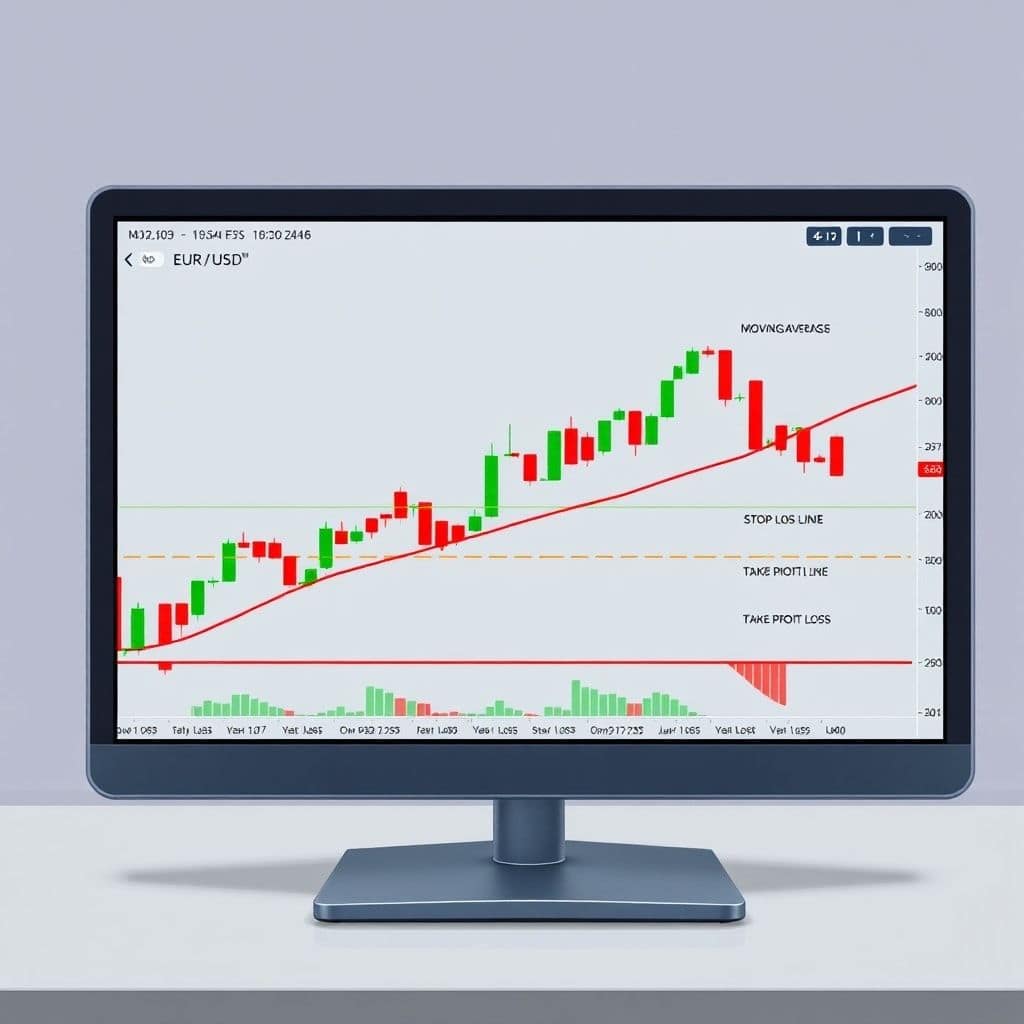
- **Stop-Loss (SL):** The price level at which you will automatically close your trade to limit potential losses. This is your “risk” component. It should be placed at a logical point where your trade idea is invalidated, protecting your capital.
- **Take-Profit (TP):** The price level at which you will automatically close your trade to lock in profits. This is your “reward” component. It must be at least three times the distance from your entry to your stop-loss to achieve Das Optimale ratio.
For example, if you enter EUR/USD at 1.1000, and your stop-loss is placed at 1.0990 (a 10-pip risk), then your take-profit target must be at least 1.1030 (a 30-pip reward) to meet the 1:3 minimum. Identifying such opportunities consistently requires skill and patience.
The Role of Technical Analysis in Finding Das Optimale Setups
Technical analysis is indispensable for identifying trade setups that offer Das Optimale risk-reward ratios. Traders often use tools like support and resistance levels, trend lines, chart patterns (e.g., head and shoulders, double tops/bottoms), and Fibonacci retracements to pinpoint potential entry, stop-loss, and take-profit levels.
For instance, if you identify a strong support level, you might enter a long trade just above it, place your stop-loss just below it (defining your risk), and then project a take-profit target based on the next major resistance level or a Fib extension, ensuring it meets your 1:3 minimum. Similarly, trend-following strategies often provide opportunities where the potential for a sustained move (reward) significantly outweighs the risk of a retracement (stop-loss).
Beyond the Numbers: The Psychological Advantage of Das Optimale
While the mathematical benefits of a 1:3 risk-reward ratio are clear, its psychological impact on a trader’s mindset is equally profound. Trading is an emotional endeavor, and fear and greed can often lead to poor decisions. By consistently aiming for Das Optimale, you cultivate a more disciplined and resilient approach.
Coping with Losing Streaks
Every trader experiences losing streaks; they are an unavoidable part of the game. However, a trader operating with a 1:1 risk-reward ratio will find a losing streak far more demoralizing and financially damaging than one operating with a 1:3 ratio. Knowing that a few winning trades can easily cover multiple losses provides a psychological buffer, reducing the pressure to “revenge trade” or deviate from your strategy after a loss. This mental fortitude is crucial for long-term success, helping you stick to your plan even when the market is testing your resolve.
Cultivating Patience and Discipline
Finding high-probability trade setups that offer Das Optimale risk-reward ratios requires patience. You cannot force trades. Instead, you must wait for the market to present opportunities that align with your strategy and meet your risk-reward criteria. This waiting game builds discipline, preventing impulsive entries and fostering a more selective approach to trading. Over time, this discipline becomes a habit, leading to more thoughtful and ultimately more profitable trading decisions.
Risk Management: The Companion to Das Optimale
While Das Optimale focuses on the ratio of potential gain to potential loss per trade, effective risk management extends to how much of your overall capital you expose to risk. Even with a 1:3 ratio, risking too much on a single trade can still lead to significant drawdowns. It’s generally recommended never to risk more than 1-2% of your total trading capital on any single trade.
Combining these two principles creates a powerful framework: you aim for high reward-to-risk trades, and you only allocate a small percentage of your capital to each of those trades. This dual approach ensures that even if you hit a series of losses, your capital remains largely intact, allowing you to continue trading and capitalize on future opportunities. For example, if you have a $10,000 account, risking 1% means you would only risk $100 per trade. With Das Optimale 1:3, your target profit would be $300.
Building a Robust Trading Plan
Incorporating Das Optimale and sound risk management into a comprehensive trading plan is non-negotiable for sustainable success. Your plan should clearly outline:
- Your chosen trading strategy (e.g., trend following, breakout, range trading).
- Specific entry and exit criteria.
- Your maximum acceptable risk per trade (e.g., 1% of capital).
- Your minimum acceptable risk-reward ratio (e.g., 1:3).
- How you will manage open trades (e.g., trailing stops, partial profit taking).
- Your daily/weekly loss limits.
Regularly reviewing and refining your trading plan based on your trading journal data is essential. This iterative process allows you to adapt to changing market conditions and continuously optimize your approach to achieving Das Optimale.
Common Pitfalls to Avoid When Chasing Das Optimale
While the concept of Das Optimale is straightforward, its practical application can present challenges. Traders must be aware of common pitfalls:
- **Forcing Trades:** Trying to find a 1:3 setup where one doesn’t naturally exist can lead to poor entries or unrealistic take-profit targets. Patience is key.
- **Unrealistic Take-Profit Targets:** Placing a take-profit too far away, beyond reasonable market movement, can result in trades reversing before hitting your target, turning potential wins into losses.
- **Moving Stop-Losses:** Widening your stop-loss after entering a trade (to avoid being stopped out) is a cardinal sin. It immediately distorts your initial risk-reward calculation and exposes you to greater losses.
- **Ignoring Market Context:** A 1:3 ratio might be harder to achieve in low-volatility environments or against strong, established trends. Always consider the broader market context.
Adherence to your predefined rules, especially regarding stop-loss placement, is paramount to maintain the integrity of Das Optimale.
The Path to Sustainable Forex Success with Das Optimale
Achieving sustainable success in Forex trading is a marathon, not a sprint. It requires continuous learning, adaptation, and unwavering discipline. By making Das optimale Chance-Risiko-Verhältnis (minimum 1:3) a cornerstone of your trading philosophy, you equip yourself with a powerful tool that offers both financial resilience and psychological stability.
This principle allows you to absorb losses gracefully, knowing that your winning trades have the potential to more than compensate. It encourages a selective approach, forcing you to wait for only the highest-probability setups. It fosters patience, discipline, and a long-term perspective—qualities that define successful traders. Remember, it’s not about winning every trade, but about ensuring that when you win, you win big enough to cover your losses and then some.
Further Learning and Resources
To deepen your understanding of risk management and trade planning, consider exploring resources on advanced technical analysis techniques, position sizing strategies, and trading psychology. Reputable financial education platforms and academic studies on trading behavior can provide invaluable insights. Many trading platforms also offer demo accounts where you can practice implementing Das Optimale without risking real capital, refining your strategy and building confidence.
Ultimately, embracing Das Optimale is about trading smarter, not harder. It’s about making calculated decisions that stack the odds in your favor, allowing you to navigate the complexities of the Forex market with greater confidence and, most importantly, achieve lasting profitability.
Conclusion: Embrace Das Optimale for Your Trading Future
In conclusion, Das optimale Chance-Risiko-Verhältnis, specifically a minimum of 1:3, is not merely a guideline but a foundational pillar for anyone serious about achieving sustainable Forex success. It empowers you to manage risk effectively, ensures profitability even with a moderate win rate, and instills the psychological discipline necessary to navigate the market’s inherent volatility. By diligently applying this principle to every trade, meticulously defining your stop-loss and take-profit levels, and integrating it into a comprehensive risk management strategy, you lay the groundwork for a robust and resilient trading career.
Don’t chase every market movement; instead, wait for opportunities that clearly present Das Optimale setup. Cultivate patience, stick to your plan, and let the power of favorable risk-reward ratios work for you. Start implementing Das Optimale in your trading today, practice consistently, and watch your performance reach peak levels. Take control of your trading destiny by prioritizing this crucial aspect of professional trading. Your journey to sustainable Forex success begins with mastering Das Optimale.
Leave a Reply